Pain and Stress
This Welfare Topic aims to help Competent Authorities and other stakeholders with issues related to painful and stressful procedures performed on ruminants and equines. The documents published by the EURCAW Ruminants & Equines on this topic are not legally binding and may be updated periodically.




Legislation
The legal requirements referred to in thematic and indicator factsheets are based on EU legislation. National regulations in EU Member States may exceed these requirements.
Council Directive 98/58/EC of 20 July 1998 concerning the protection of animals kept for farming purposes states general rules for the protection of animals kept for farming purposes.
- Article 3 Member States shall make provision to ensure that the owners or keepers take all reasonable steps to ensure the welfare of animals under their care and to ensure that those animals are not caused any unnecessary pain, suffering or injury.
- Annex, 1 Animals shall be cared for by a sufficient number of staff who possess the appropriate ability, knowledge and professional competence.
- Annex, 4 Any animal which appears to be ill or injured must be cared for appropriately without delay and, where an animal does not respond to such care, veterinary advice must be obtained as soon as possible. Where necessary sick or injured animals shall be isolated in suitable accomodation [sic] with, where appropriate, dry comfortable bedding.
- Annex, 19 Pending the adoption of specific provisions concerning mutilations in accordance with the procedure laid down in Article 5, and without prejudice to Directive 91/630/EEC, relevant national provisions shall apply in accordance with the general rules of the Treaty.
Regulation (EC) No 1760/2000 of the European Parliament and of the Council of 17 July 2000 establishing a system for the identification and registration of bovine animals and regarding the labelling of beef and beef products and repealing Council Regulation (EC) No 820/97 as well as Regulation (EU) No 653/2014 of the European Parliament and of the Council of 15 May 2014 amending Regulation (EC) No 1760/2000 as regards electronic identification of bovine animals and labelling of beef provide provisions on means of identification to identify animals individually.

©de-Boyer-des-Roches-A
in individually housed calves
©de-Boyer-des-Roches-A
in individually housed calves
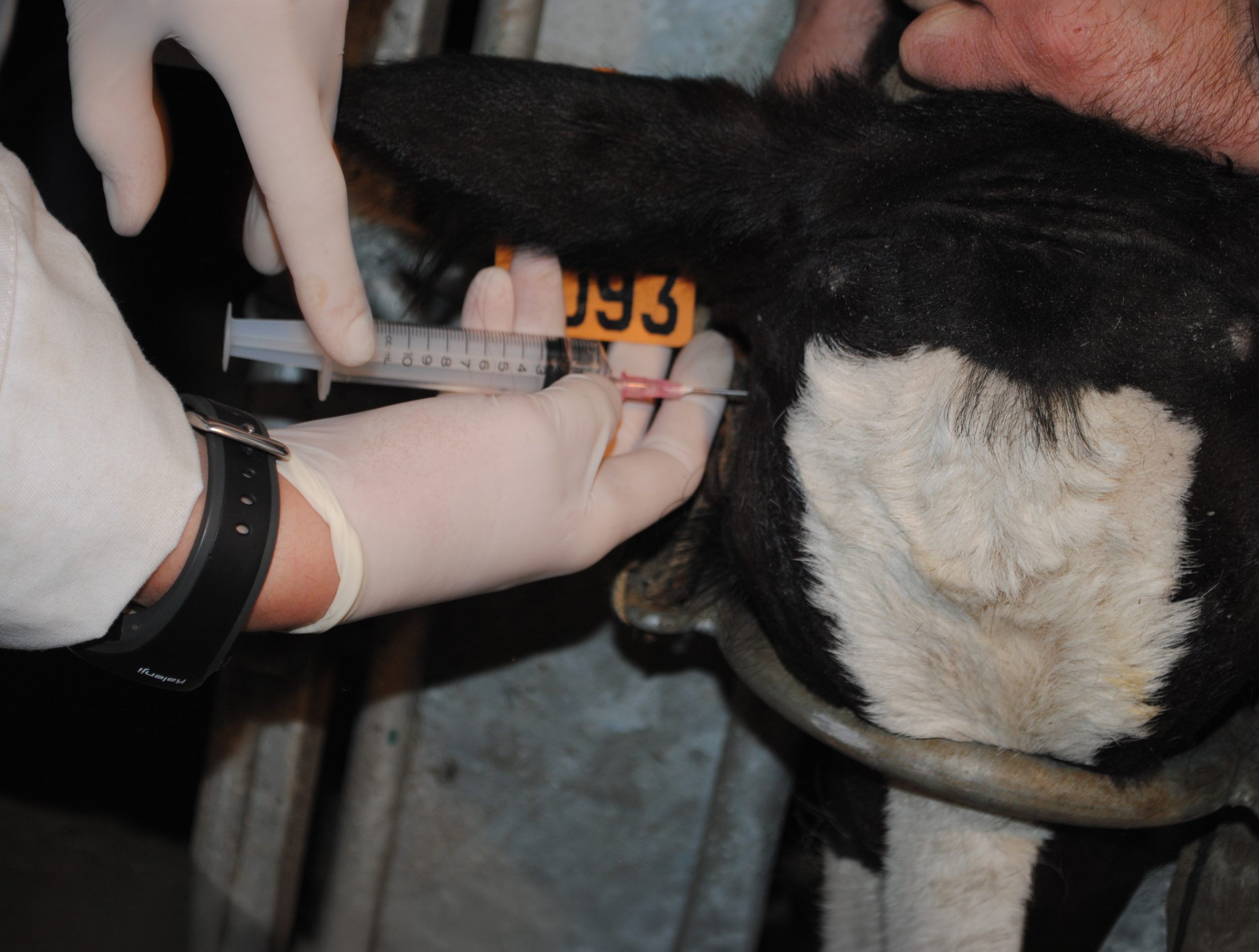
©de-Boyer-des-Roches-A
in individually housed calves
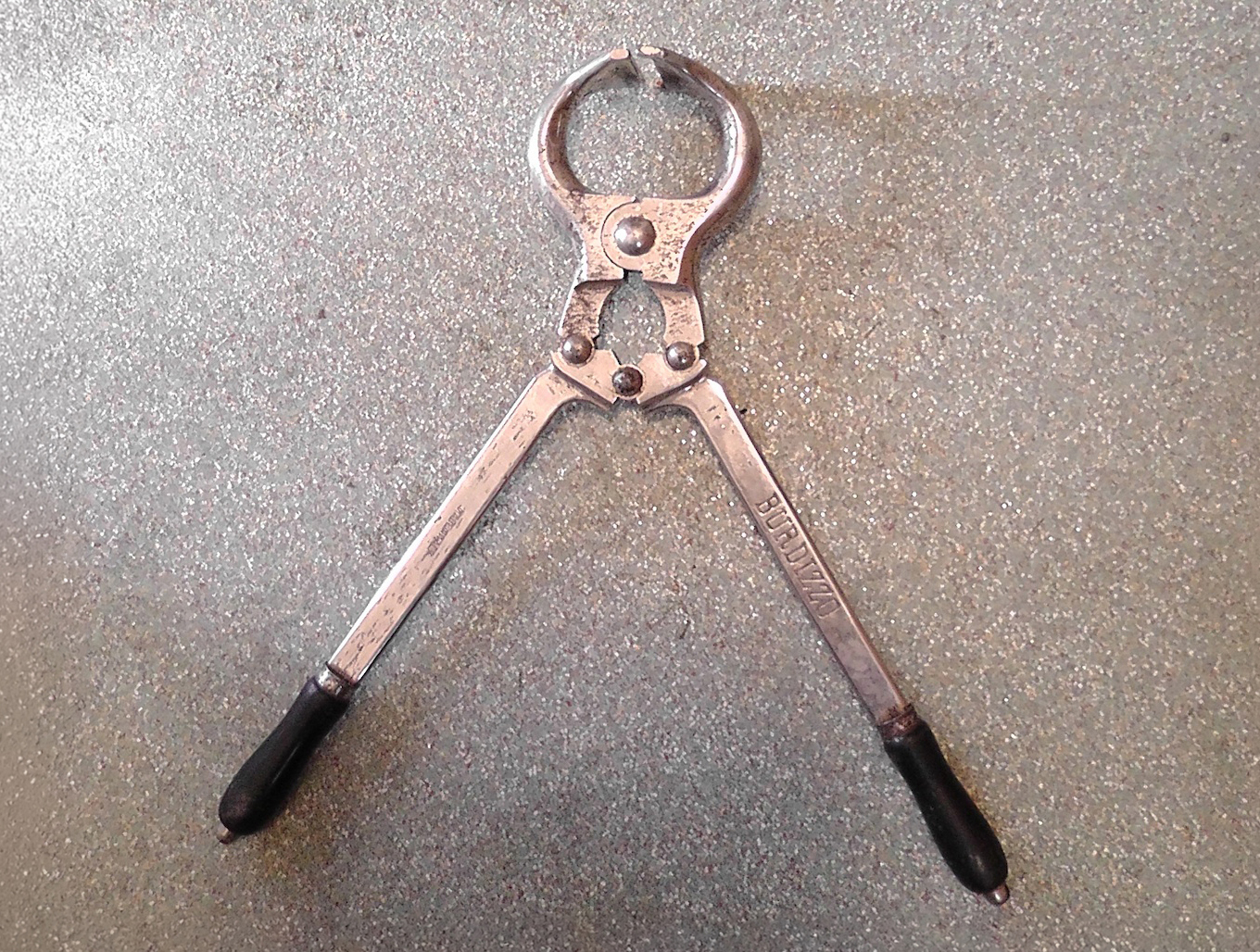
©EURCAW-Hanlon-A
in individually housed calves
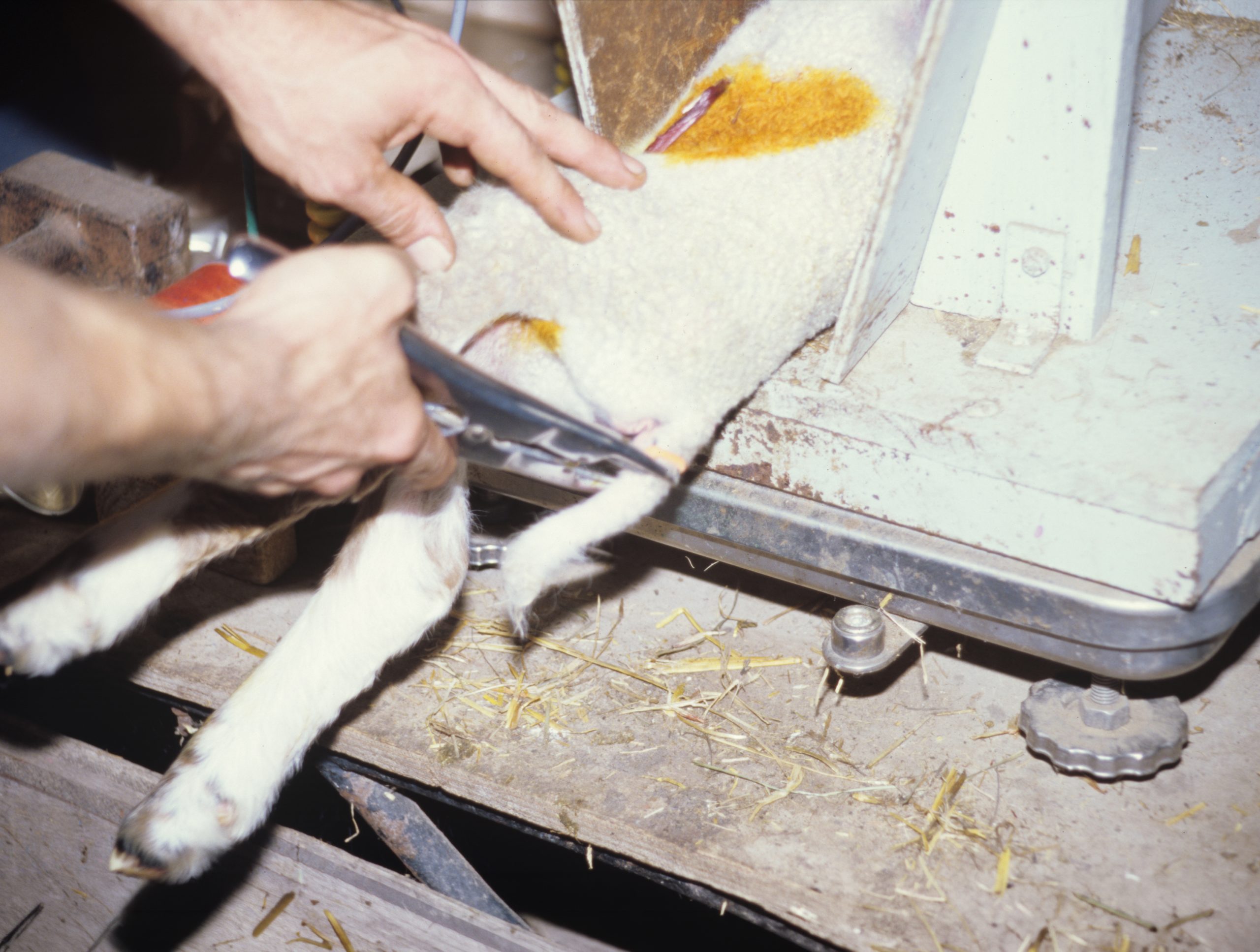
©INRAE-Cattiau-G
in individually housed calves

Knowledge
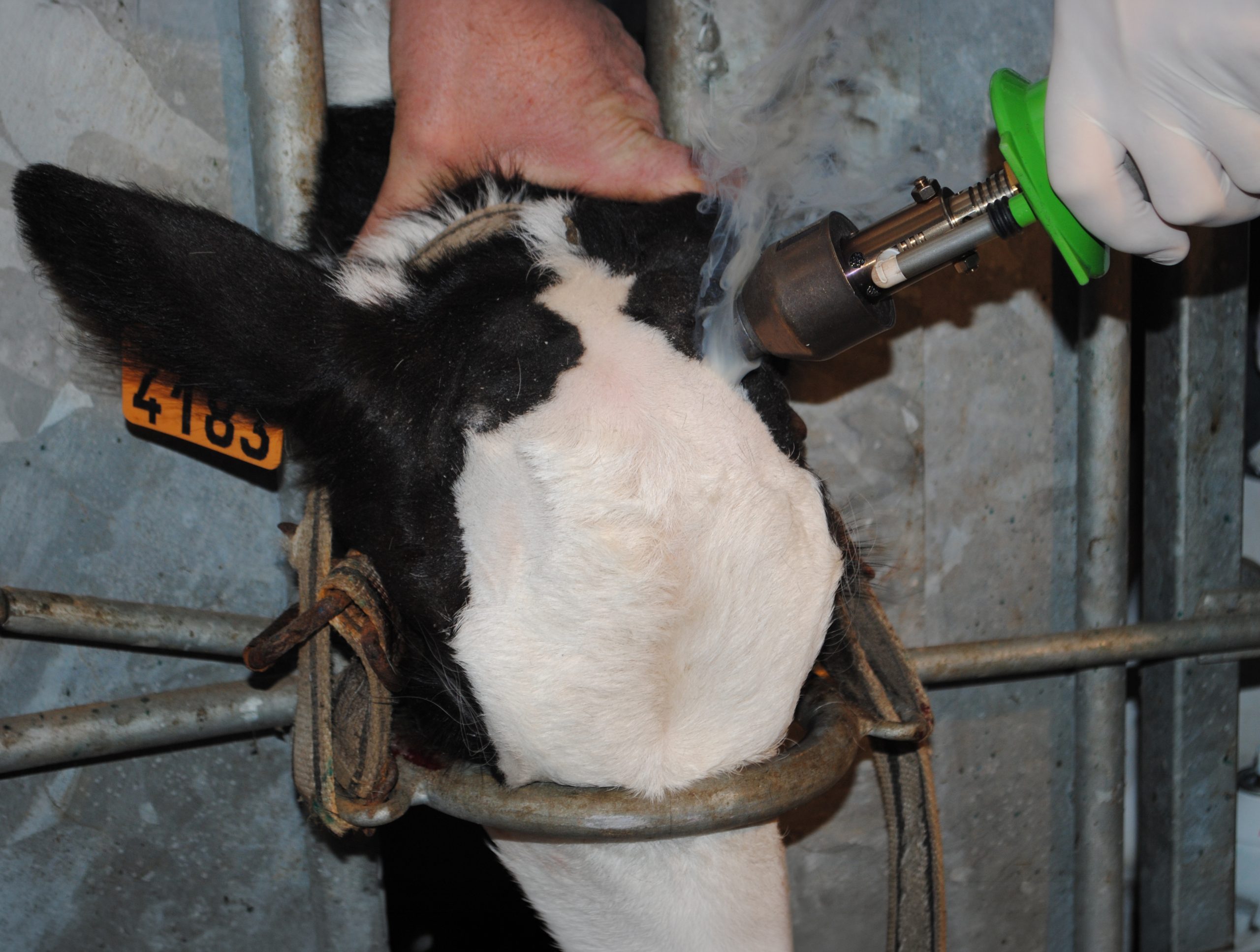
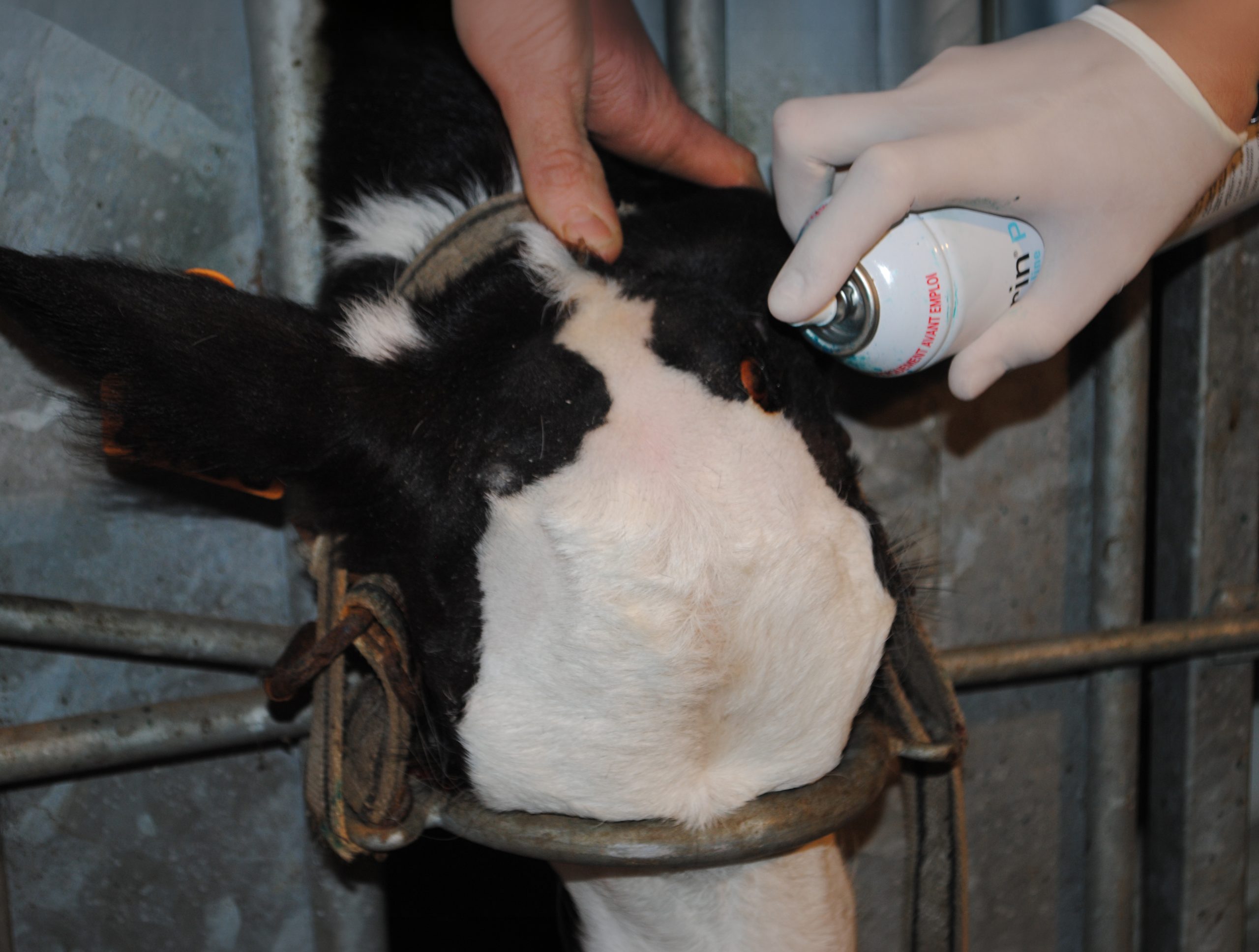
Painful procedures in farm animals, i.e. non-therapeutic operations and procedures which involve interference with or the removal of sensitive tissue or bone structure of the animal, are common practice. The rationale behind such procedures, which may be carried out by farmers, other qualified farm personnel, or veterinarians is threefold:
- identification purposes;
- reducing the risk of injury to the animal, other animals or caretakers; and
- commercial reasons, such as improving production efficiency or meat quality.
Pain is defined by the International Association for the Study of Pain as “An unpleasant sensory and emotional experience associated with, or resembling that associated with, actual or potential tissue damage.” (Raja et al., 2020) and is expressed through behaviour including:
- during the procedure: defensive behaviours (e.g. kicks), withdrawal, and vocalisation;
- after the procedure: changes in postures (e.g. lowered head, arched back, extended legs), in facial expression (e.g. eyes wide open), increased stimulation (e.g. grooming) of the painful area, reduced feeding/ruminating activities, increased immobility, social withdrawal (e.g. reduced social interactions, increased distance to pen-mates.
Handling during painful procedures is stressful for the animals and thus methods of restraint should be performed with care e.g. adopting low stress handling techniques and using appropriate equipment to restrain animals. All procedures should aim to minimise pain, stress and fear in the animals, as part of a good treatment. Any physical or mental suffering experienced by an animal that could reasonably have been suppressed, substituted or soothed e.g. through appropriate care, housing, handling, treatment or humane procedures (including the use of sedation, anaesthesia and analgesia), may be deemed unnecessary.
The following Thematic Factsheet examines common painful and stressful procedures in cattle (e.g. identification marking, disbudding/dehorning, castration, tail docking). See the description below for the biological background, legal requirements and focus areas for inspection.

Tools for Inspection
With respect to the procedures applied in livestock husbandry, it is recommended to focus on the following areas:
- Farm records regarding application of sedation, anaesthesia, and analgesia during painful (surgical) procedures
- Signs of post-operative pain (e.g. behavioural changes such as increased restlessness, head shaking, decreased rumination, abnormal posture, tissue sensitivity, wound-directed behaviour)
- Specific changes to the body as a direct consequence of the procedure (e.g. absence of horn buds, presence of nose rings, identification tags on ears, identification marks on other body parts, testicles)
- Presence of appropriate handling facilities and equipment Animal-based indicators of pain and stress are provided in this Indicator Factsheet.