© BOKU / SCHENKENFELDER Josef
Visual and tactile contact in individually housed calves
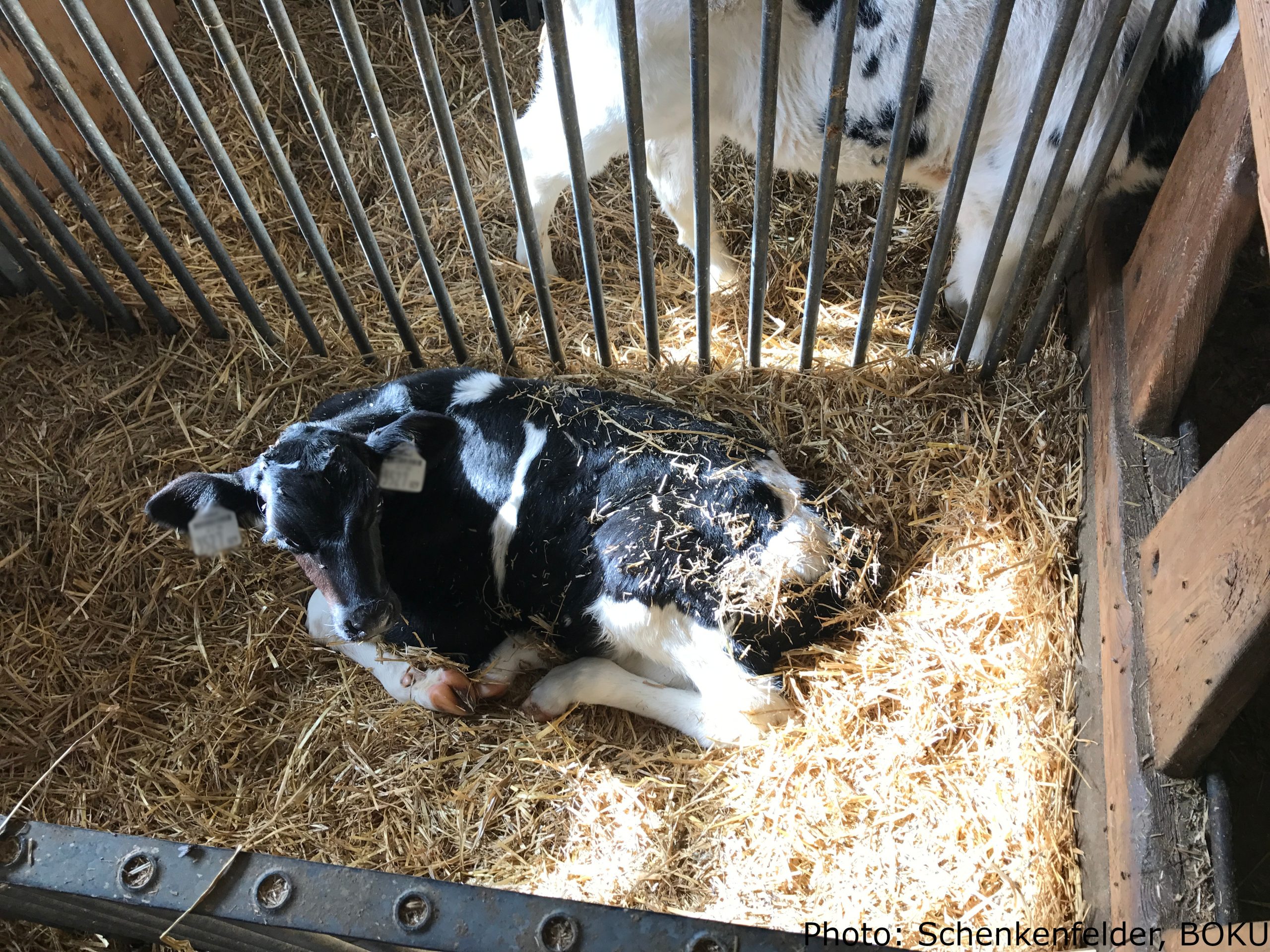
It is common practice in the dairy sector to separate calves from their dam shortly after birth and to keep them in individual pens during the first weeks of life. This routine, however, disregards the social nature of bovine species and strongly restricts or even rules out social contact between a calf and other adult or young conspecifics.
The Directive 2008/119/EC specifically refers to visual and tactile contact. In this Thematic Factsheet, the biological needs of calves, legal requirements and focus areas for inspection are described.

Author:
Christoph Winckler,
Josef Schenkenfelder,
Clémence Lesimple,
Alline de Paula Reis,
Susanne Waiblinger,
Francesca Fusi,
Emmanuela Rossi,
Domenico Vecchio,
Evangelia Sossidou
Josef Schenkenfelder,
Clémence Lesimple,
Alline de Paula Reis,
Susanne Waiblinger,
Francesca Fusi,
Emmanuela Rossi,
Domenico Vecchio,
Evangelia Sossidou
Reference Code:
TFS-Ruminants-Equines-2022-01-EN
Citation:
Winckler, C., Schenkenfelder, J., Lesimple, C., de Paula Reis, A.,Waiblinger, S., Fusi, F., Rossi, E., Vecchio, D., Sossidou, E. (2022) Thematic Factsheet: Structural features of partitions between individually housed calves. EURCAW Ruminants & Equines. https://doi.org/10.5281/zenodo.7648849
Reviewers:
Isabelle Veissier &
Alison Hanlon
Alison Hanlon
Source:
EURCAW Ruminants & Equines
Year:
2022