SUMMARY
FRCAW new report on cattle transport: Loading density and its impact on falls and injuries
© iStock / PERFECTTI Miguel
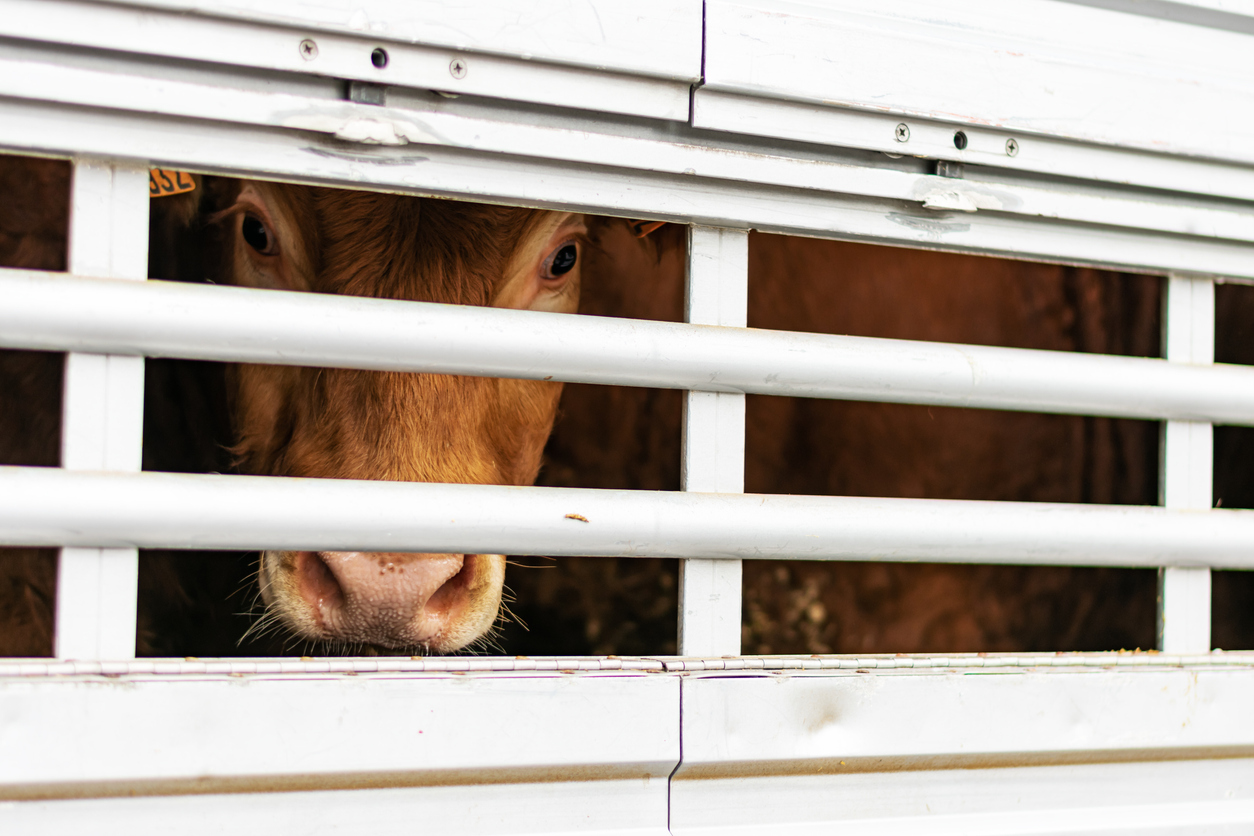
The French Reference Centre for Animal Welfare (FRCAW) has released a report examining the impacts of loading density on the risk of falls and injuries in cattle during transport. Commissioned by the Animal Welfare Office (BBEA) of the General Directorate for Food (DGAL) within the French Ministry of Agriculture and Food Sovereignty, the document builds on the findings of the European Food Safety Authority’s 2022 opinion. Its primary focus is on the relationship between space allowances during transport and the occurrence of falls and injuries, while also offering a detailed review of existing scientific literature on the subject.
The report explores the scientific literature on the behavioural and physiological responses of cattle to varying loading densities, alongside evidence related to haematomas observed on carcasses. It identifies a range of contributing factors that may increase the likelihood of falls and injuries during transport and outlines possible approaches to mitigate these risks. Although the number of studies specifically addressing cattle at the space allowances proposed in the revised regulatory framework remains limited, the available literature supports the assumption that increased space would contribute to a reduction in falls and injuries. At the same time, the report emphasises the need for further research, particularly in relation to adult cattle and in consideration of additional risk factors.
Across all categories of cattle, including calves, young adults, and fully grown animals, the proposed increases to space allowance are not associated with an increased risk of falls or injuries during transport. On the contrary, these allowances appear to support improved balance, encourage animals to lie down more frequently, especially when straw bedding is provided, and contribute to lower levels of fatigue. In the case of calves, no additional stress has been observed when they are transported under the space conditions outlined in the proposed regulation.
According to the report, an increase in space allowance (reduction in loading density) would reduce the risk of falls and injuries during transport, taking account of other parameters such as:
- The quality of driving and the route taken
- The design of vehicles
- The presence and type of bedding
- The duration and distance of the journey
This analysis is situated within a broader context of the revision of existing EU legislation on animal transport. In December 2023, the European Commission published its Proposal for a Regulation of the European Parliament and of the Council on the protection of animals during transport and related operations, amending Council Regulation (EC) No 1255/97 and repealing Council Regulation (EC) No 1/2005, currently in force. The revision draws directly on scientific opinions issued by the European Food Safety Authority and aims to update requirements, particularly those relating to space allowances during transport.
See more: Full report
Citation: Camille Bezançon, Lisa Diaz, Louise Kremer, Violaine Colson, Agnès Tiret, FRCAW panel of experts, Geneviève Aubin-Houzelstein. Opinion of the FRCAW on the impacts of loading density on the risk of falls and injuries in cattle during transport. FRCAW / CNR BEA. 2025. Translated by Teresa Bridgeman DOI: 10.17180/cj33-by25