SUMMARY
EFSA pilot study explores new stakeholder engagement methods beyond public consultations
EFSA has conducted a pilot study to test new approaches to stakeholder engagement alongside traditional public consultations, focusing on its upcoming scientific opinion on plant lectins in food.
The research stems from EFSA’s ongoing implementation of the Transparency Regulation, which mandates public consultations in the risk assessment of regulated products. Recognising that traditional consultations alone may not always yield the most relevant or high-quality input, particularly in cases involving specialised technical knowledge or emerging areas, EFSA developed a ‘Roadmap for Action on Evidence-Based Risk Communication in the EU Food Safety System’.
This roadmap explored alternative engagement formats, including: public hearings, citizen panels, public dialogues, and co-creation processes. These approaches are not intended to replace standard public consultations, but to complement them by fostering more participatory, targeted, and reflective forms of engagement.
As part of this effort, the pilot featured a targeted, interactive public hearing that used engagement tools to encourage participation and gather technically informed input. Insights from EFSA staff indicate that the hearing was effective, particularly in terms of engagement and moderation, although improvements were suggested regarding interactivity and the management of participant questions. Stakeholders also reported a positive experience, with recommendations for extended discussion time.
This initiative aims to enhance the transparency, inclusiveness, and scientific quality of stakeholder contributions, while addressing misconceptions and fostering mutual understanding of risk communication strategies.
The report also reviews other EFSA experiences with complementary engagement methods, including work on risk-benefit assessment guidance, food additives, and animal welfare. These cases demonstrate the adaptability and effectiveness of structured, interactive formats in supporting scientific assessment.
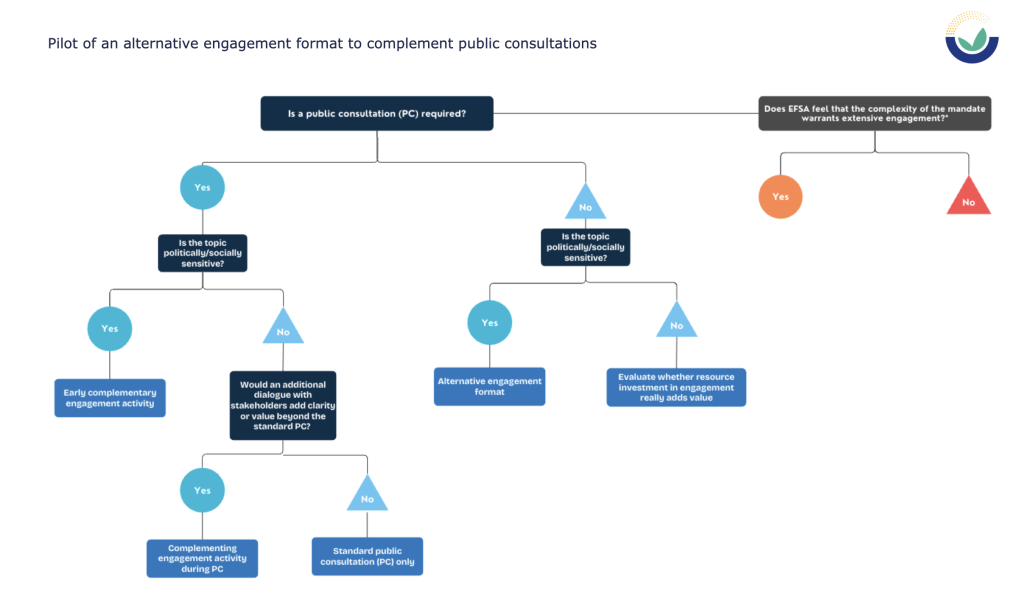
Finally, the report introduces a decision tree and a set of criteria to help identify suitable complementary engagement formats, based on the nature of the topic, the level of stakeholder interest, and the timing of the consultation.
© EFSA Supporting publication 2026:EN-9933
See more here: Full report